Robot, task, and evaluation planning
Review the target robot, desired motions, available data, and development environment.
Define tasks and validation scope, then choose evaluation methods such as posture stability and task success rate.
Robot models and simulation environments
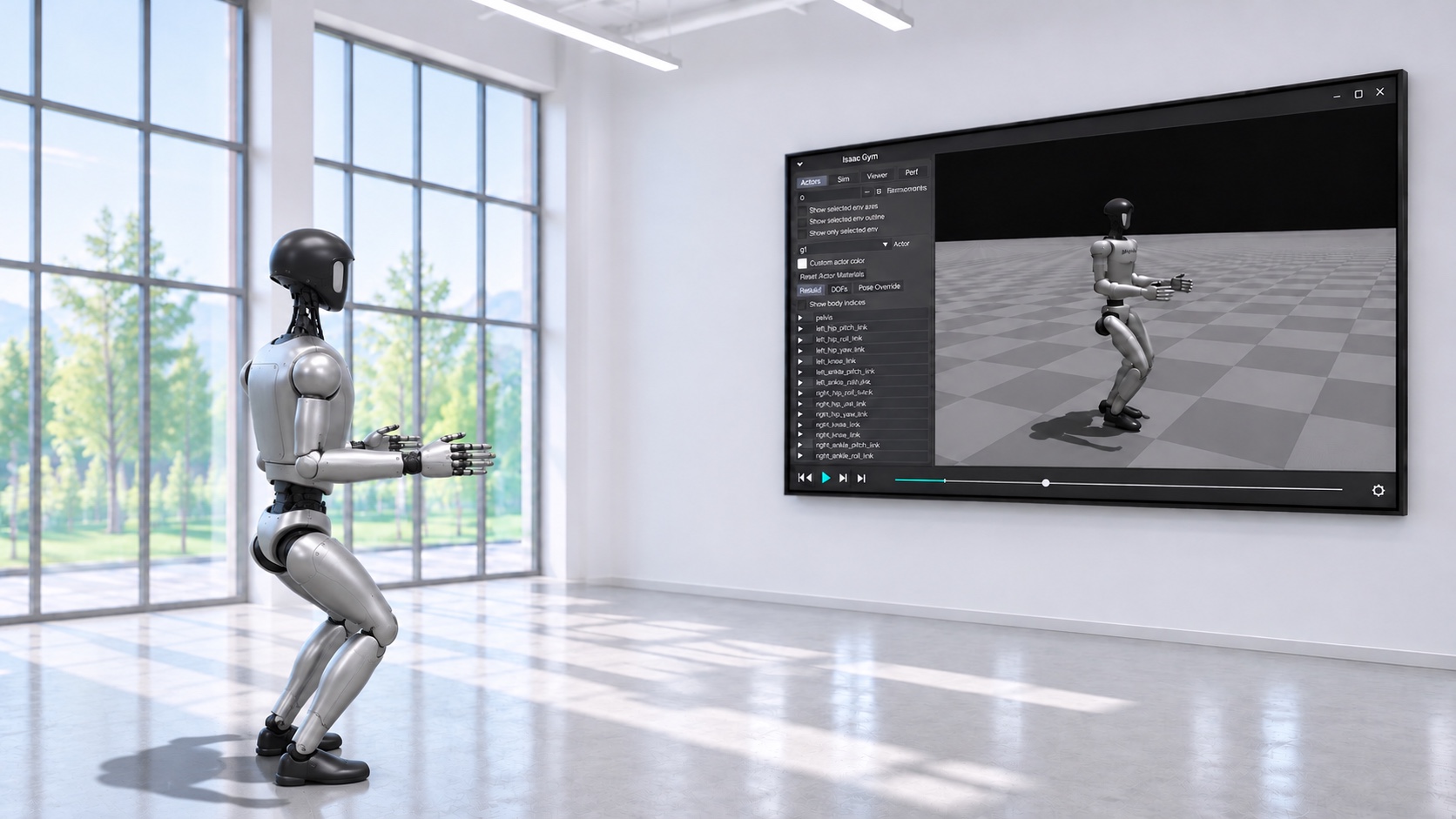
Import and refine the robot model in a simulator such as NVIDIA Isaac Sim, configuring joint ranges, physical properties, and sensors.
Build the workspace and task objects into a virtual environment suited to the intended tasks.
Motion and function development
Develop posture control, locomotion, and object manipulation for the robot's specifications and goals.
Test tasks combining multiple motions and identify loss of balance, contact, and failure conditions.
AI model development and tuning
Choose methods suited to the robot and task, such as simulation-based learning with Isaac Lab or adapting Isaac GR00T foundation models.
Use collected motion data and simulation results to develop and tune AI models.
Compare behavior under consistent conditions and refine models based on success rate, stability, and execution speed.
Hardware transfer and motion validation
Prepare hardware interfaces, execution conditions, and test procedures to transfer validated motions and models.
Check differences from simulation and feed hardware results back into the environment and model refinement.