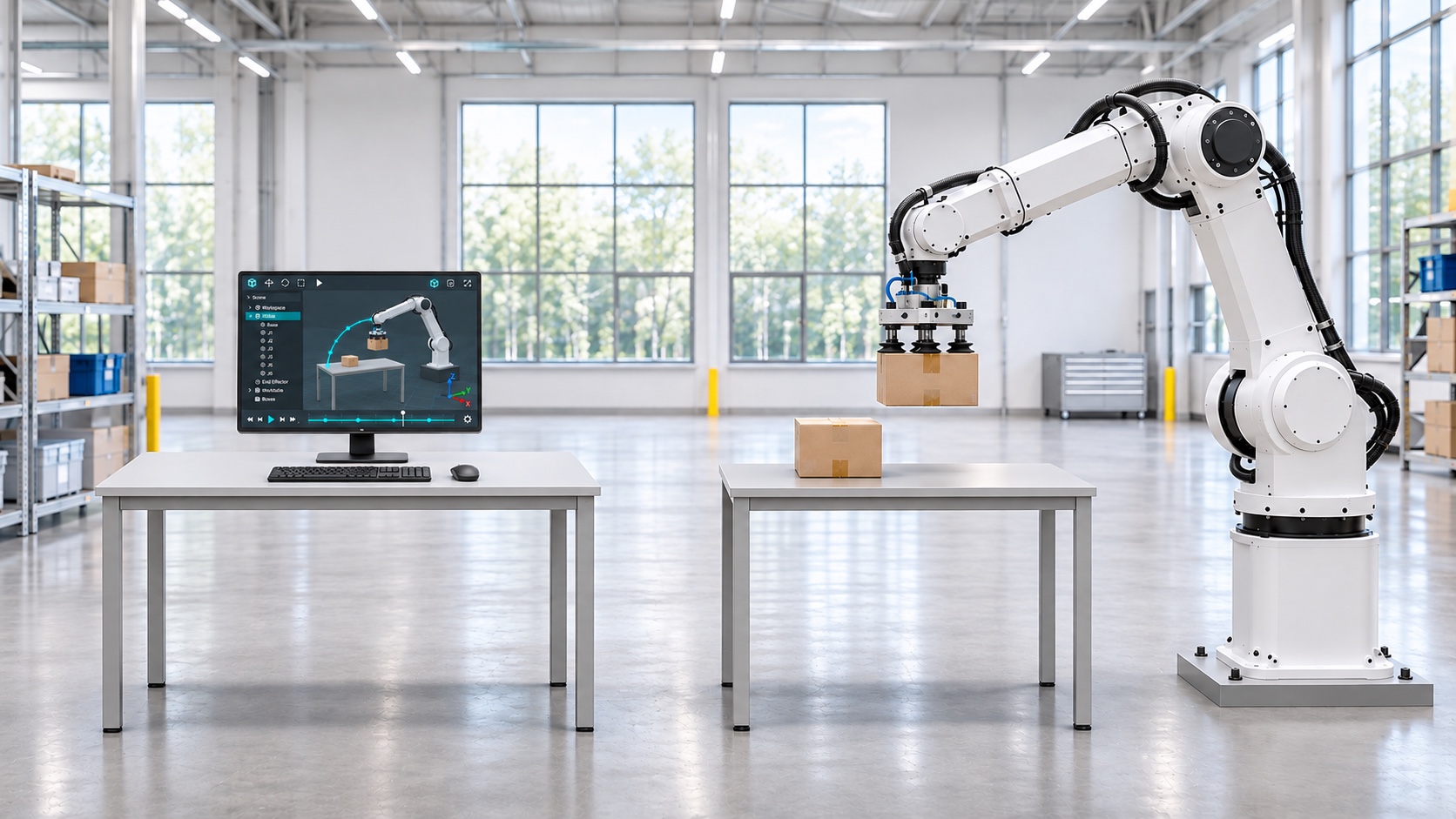
Requirements and simulator selection
Review the robot, tasks, and available data to define the validation scope and evaluation methods.
Evaluate environments such as NVIDIA Isaac Sim for the required physics, sensor simulation, and hardware interfaces, then select a suitable configuration.
Virtual environments and data integration
Model the robot, task objects, and workspace and configure the conditions needed for validation.
Incorporate collected and prepared data, including hardware dimensions and motion logs.
Motion tests and comparison
Define task sequences and test conditions, then compare completion, contact and interference, and execution time.
Repeat trials under varied conditions to identify motions and task stages that need improvement.
Motion and AI model refinement
Refine motion settings and control logic based on validation results.
Where AI is used, support simulation-based learning with tools such as Isaac Lab and tune models for the robot and task, comparing behavior before and after changes.
Hardware test and transfer design
Define hardware checks, operating ranges, interfaces, and test procedures.
Validate and refine the work for the target hardware and site conditions, then hand over simulation results for deployment.